
THIS IS WHY WE RAPE YOU.

Words uttered by an imbecile who believed a woman’s body was a permission slip.
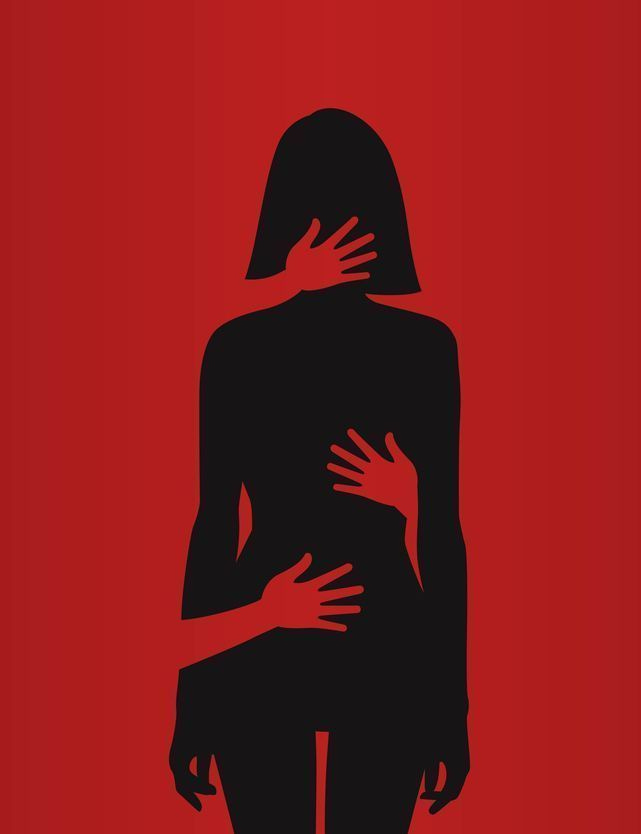
“This is why we rape you.” That sentence sounds violent because it is. Not just because of the act itself, but because of how often society quietly finishes that sentence for perpetrators. The clothes she wore, the way she spoke, the alcohol, the hour, her vulnerability, the existence of her body in public. For years, women have lived inside a world that constantly explains violence committed against them instead of condemning it. A world where men harm women and people immediately begin searching for what she could have done differently instead of asking why he felt entitled to hurt her at all. This article is not about justification. It is about the terrifying normality of the excuses.
I know this sounds cliché, like the beginning of one of those primary school compositions where every story starts with “it was a beautiful sunny day,” but it truly was. It had just stopped raining and the rainbow stretched quietly across the sky. The air smelled of wet soil, you know that earthy scent after it rains. I had just come back from writing my neuropsychology exam and i was in such a good mood. I had absolutely hammered that paper!
I was making my way through the taxi rank, weaving through people and all that chaos. There was a girl walking a few steps ahead of me. She was beautiful and walked with confidence, owning her every step. She wore a mini skirt and a crop top. And that should have been the end of the story…just a girl walking and existing. There was a group of men by the taxis and they had their eyes fixed on her from the moment she walked past. There were whistles and catcalls. Then one of them shouted, “ha o bona re le raper yaana,” meaning, “this is why we rape you.” Just like that, so casual like somebody commenting on the weather. The girl was not aware of the words that were just directed to her because she had her headphones on…ooh wait those words were directed to all of us, to all women. That was the moment i realized how deeply violence against women is woven into everyday language, it is spoken out loud and still ignored.
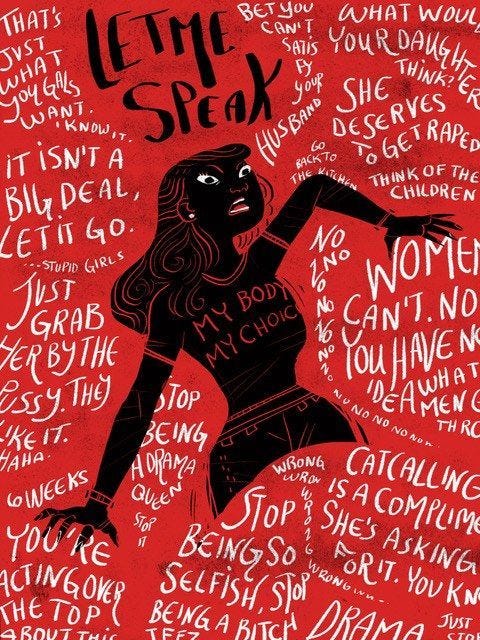
What disturbed me most was not just what he said, but how ordinary it felt to everyone else. Nobody stopped him, nobody looked horrified enough. His buddies laughed and people stared at the girl instead of the man who had just casually referenced sexual violence as punishment for a woman existing confidently in her own body. Even some women who were there joined in and agreed with him, one of the women said “ga ba apare bana ba malatsiano go tsweng hoo wa go utlwa motho wa teng a re hewee hewee rape” meaning “children of nowadays don't cover up, then next thing they cry rape”. That statement broke my heart, i wondered if that woman would say the same thing if it was her own daughter.
I suddenly understood something terrifying about the world women grow up in. We are taught survival before we are taught freedom. Don’t walk alone, don’t wear certain things, don’t stay out too late, don’t trust too easily. Share your location, hold your keys between your fingers, pretend to call someone, text when you get home. And somewhere along the way, society stopped asking why women must constantly adapt to danger and started treating the danger itself as inevitable.
It's not because women provoke violence, but because too many people have normalized the idea that male desire, entitlement, and anger are forces women are simply expected to manage. Because society questions what you wore before questioning why he felt entitled to violate her, because women’s fear has become background noise. Because accountability is rarer than excuses, because boys are too often taught dominance before empathy, because too many men grow up believing a woman’s body is public territory the second it becomes visible. The scariest part is that these beliefs do not always live in dark alleyways or criminal documentaries…sometimes they sit openly at taxi ranks in broad daylight, laughing with friends while a girl walks past unaware that her existence has just been turned into a threat.
I once told a male friend how much i hated it when men in the streets made comments about my body. How exhausting it was and instead of understanding, he said, “ba ka thoka jang o nna o apere dilo tse di khutshwane o ntshitse dirope?” Meaning, “how can they not when you’re always wearing short clothes with your thighs out?” I remember sitting there thinking, what exactly are you trying to say? That it serves me right? That women deserve to be made uncomfortable because men refuse to control themselves? That harassment suddenly becomes understandable the moment a woman’s body becomes visible? That rape victims somehow “asked for it” because they weren’t dressed the way society considers appropriate? My mind started spiraling, did he mean what happened to me during my first semester of varsity was my fault too? The night i had to fight off a man i trusted when he tried to force himself onto me. Was it because i went to his room? Because my top showed cleavage? Is that all it takes for people to quietly decide a woman is responsible for a man’s violence?
What about every time someone touched me without my consent? What about the cousin who abused me as a child? Was that my fault too? Was it because of my short pyjama pants? Because if this is truly about clothing, as people so often claim, then explain the babies, explain the toddlers. Explain the children violated before they even understand what violation is. Children in diapers, children who still need help tying their shoes, we call children “madi a senang molato” in Setswana, meaning “innocent blood.” What kind of human being does that to another person and still calls themselves human? Explain the elderly women with wrinkled skin and walking sticks, when there is no short skirt, no makeup. Explain the victims who were never dressed provocatively a day in their lives. Predators do not stop at women society considers “provocative.” Now, what excuse survives that reality?
The truth people refuse to confront is far uglier, this has never been about clothing. It has always been about entitlement, power, and a society more comfortable policing women’s bodies than questioning the violence men commit against them. And yet, women are still the ones expected to adjust. We learn to measure our steps before we even understand why we’re afraid. We learn which clothes are “safe,” which routes are “wise,” which hours are “acceptable” to exist outside. Not because freedom is unavailable, but because safety is always made conditional for us. And while women are taught prevention, men are rarely taught accountability with the same urgency.
And now women joke online about “giving a man my number so he doesn’t murder me,” except it is not really a joke at all. It is survival disguised as humour, because rejecting men does not always feel safe. Ignoring catcalls does not always feel safe. Sometimes even saying “no” politely feels dangerous because you do not know how quickly wounded entitlement can turn into aggression. I have been insulted by men simply because i refused to stop when they called for me or because i ignored comments about my body. And even in those moments, you hesitate to respond because you know one wrong reply could suddenly make it a very bad day for you. That is the exhausting reality women live with. We are expected to constantly manage male reactions, carefully calculating tone, politeness, and response in exchange for safety. And after a while, you start wondering where this sense of ownership even comes from. What teaches so many men that access to women’s time, attention, bodies, or even kindness is something they are owed?
we are living in a world where our bodies are constantly under review, while the actions of those who violate us are endlessly rationalized and that will never make sense to me. And if this were just about individual opinions, maybe it could be ignored, but it isn’t. In Botswana, studies have found that around two thirds of women have experienced some form of gender based violence in their lifetime. Some estimates place it closer to almost 70%, and yet, only a tiny fraction of cases ever reach the police. That means most of what women survive never becomes a statistic, it becomes silence instead. So when people reduce violence to clothing, or excuses, or “what she did wrong,” they are not debating theory. They are speaking in a country where the majority of women have already lived through harm that was never truly acknowledged.
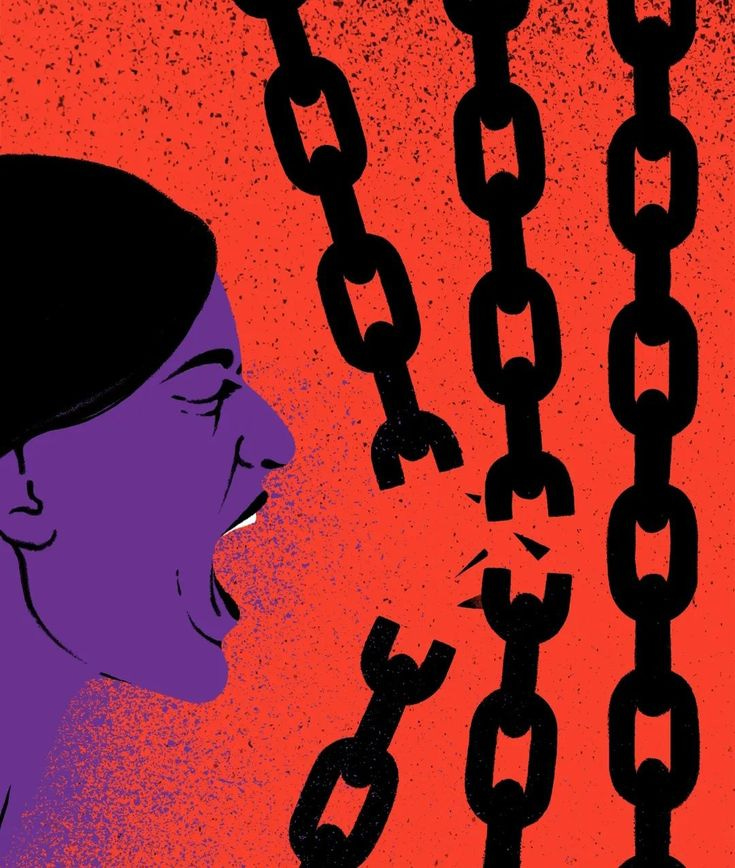
And still, the focus returns to her body. Never the pattern. And one of the clearest reasons these numbers stay hidden is because of what happens when women do speak. Reporting is rarely just about telling the truth, it is about deciding whether you are ready to be questioned, doubted, and dissected in return. Many women stay silent not because nothing happened, but because they already know the secondary violence waiting for them if they speak.
Who will ask what you were wearing
Who will ask why you went there
Who will ask why you didn’t leave sooner
Who will suggest misunderstanding before they consider harm
And in that process, the focus shifts away from the person who caused the harm and onto the person who survived it. So even when women are believed, they are often not protected and even when they are heard, they are rarely left untouched by the way they are treated afterward. That is why silence is not absence, it is calculation. So the system does not need to openly say women should stay quiet. It only needs to consistently show them what happens when they are not. Society is so used to blaming the victim that it starts early.
You hear it in advice that is meant to sound protective but reveals something far more disturbing underneath it, “don’t wear shorts around your brother,” “don’t wear tight dresses around your father.” And you have to pause and ask, what is that really saying? That women’s bodies are the problem even in the safest spaces? That the solution to male behaviour is to manage female existence instead of male accountability? Because if the burden is always placed on women to shrink, cover, and monitor themselves in their own homes, then the message is not protection. It is suspicion, it is conditioning.
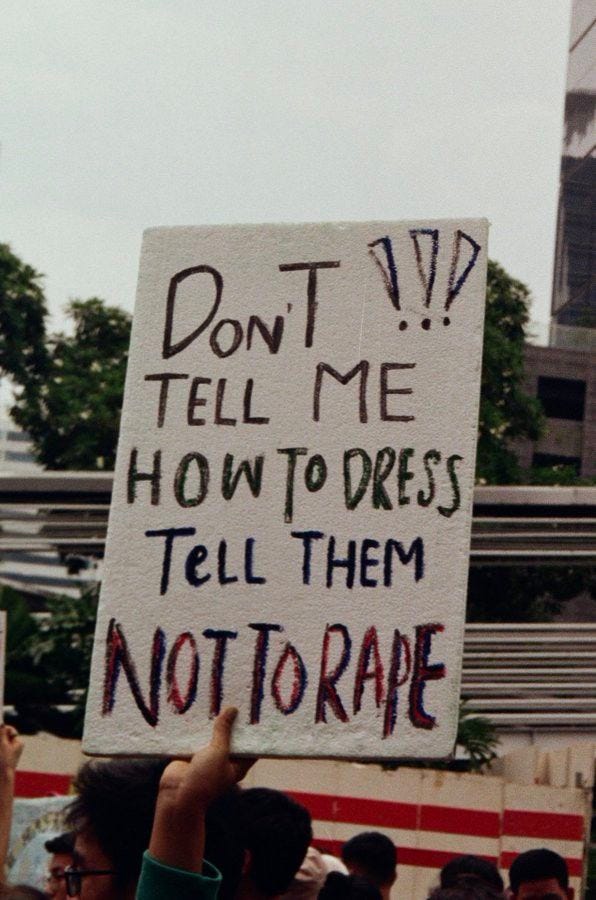
It is teaching girls, from childhood, that their bodies are inherently disruptive. We excuse men so instinctively that phrases like “boys will be boys” and “men will be men,” are repeated like universal truths instead of pathetic reflections of how low society’s expectations for male accountability really are. Well, excuse my French, but to hell with that. Honestly, i wanted to use a much stronger phrase than “to hell,” but i recently promised myself i would stop cussing since apparently men don’t like “rough” women. You hear that that? Funny how even our anger is expected to be presentable. But that is a conversation for another article entirely
“This is why we rape you.” A sentence uttered by what we call “mowa” back in my home village, meaning a foolishly foolish fool out of all the foolish fools, nothing in their head, just air. The kind of fool completely abandoned by sense.
Sexual violence should never be treated lightly, whether it appears in action or in language. Statements like “this is why we rape you” are not jokes, not commentary, and not harmless anger. They are expressions of entitlement to violence, spoken out loud in a world that too often fails to respond with the seriousness they deserve. Because words like that do not exist in isolation, they reveal a mindset that normalizes harm and reduces women to objects rather than human beings, and when that mindset is expressed openly, it should be recognized for what it is, not softened into something acceptable. A society that claims to protect women cannot continue treating threats of sexual violence as casual speech. It must understand that normalization is part of the problem itself. And so this is not a request anymore, it is a refusal.
We are not asking to be understood after the fact. We are demanding a world where we do not have to survive this in the first place. Where our bodies are not debated, our clothing is not evidence, and our existence is not treated like provocation.
Stop excusing it
Stop normalizing it
Stop teaching it
We are not the problem
We never were
The danger was never our existence. It was the entitlement attached to it. The harm is not misunderstood. IT IS ALLOWED.
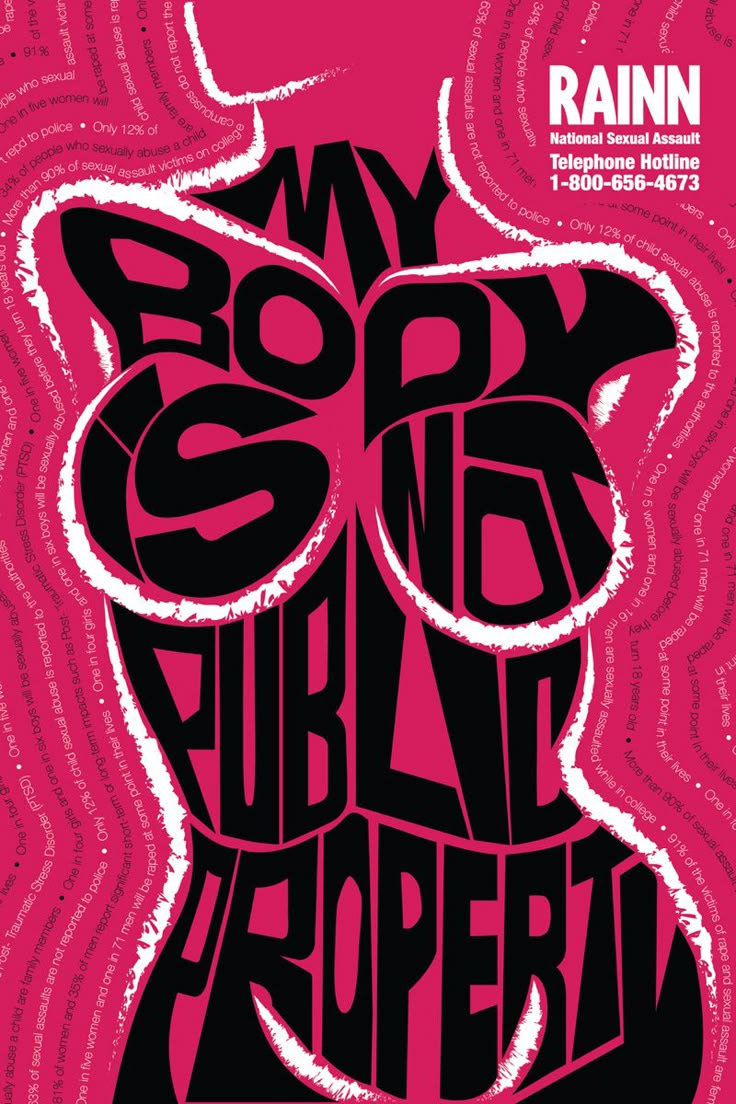
plus i love that pink poster. I took a screenshot. 💕
that part about people focusing on the woman being insulted and not the man hurling insults made me just sigh. it's so frustrating man.😔